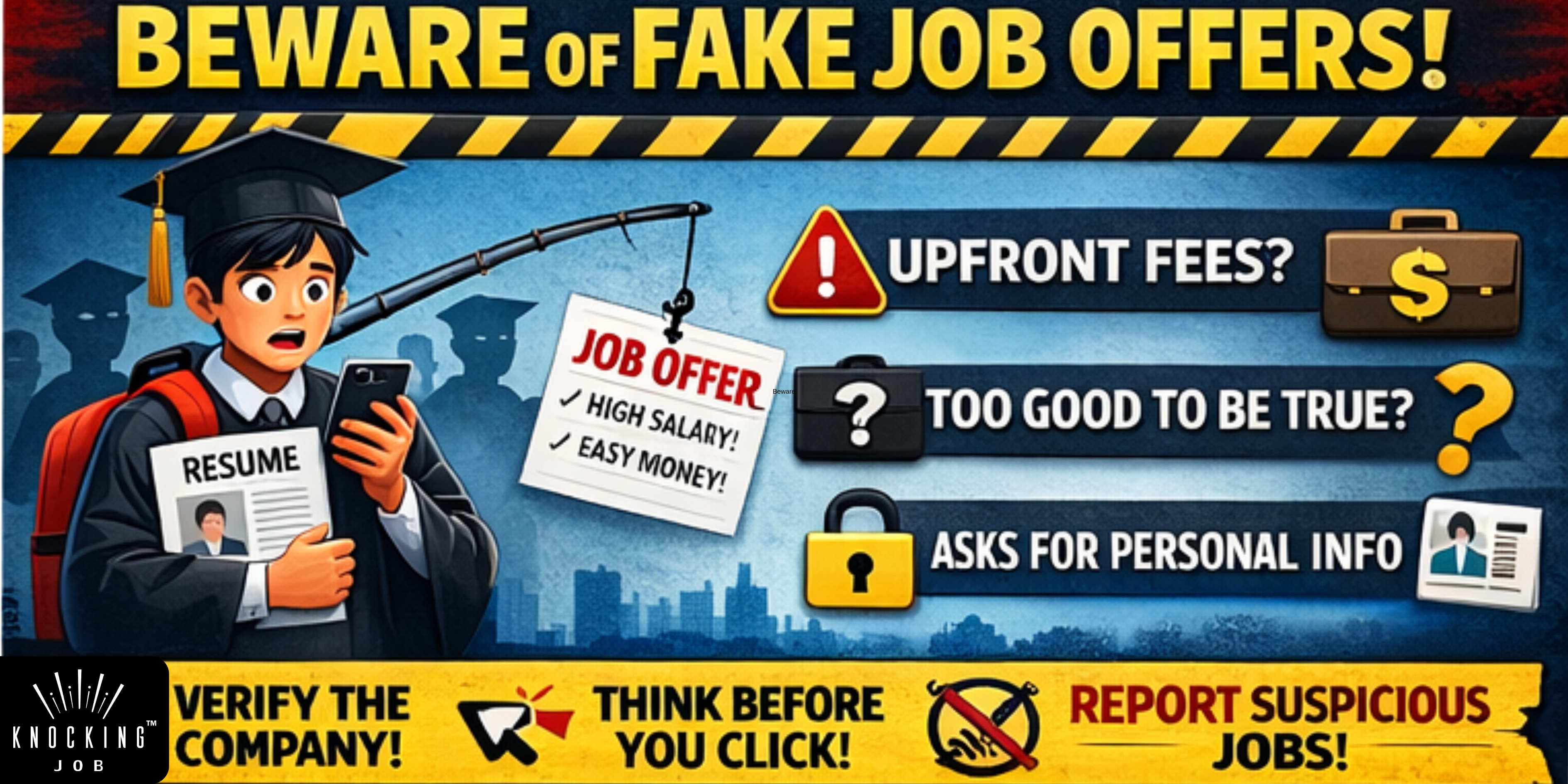
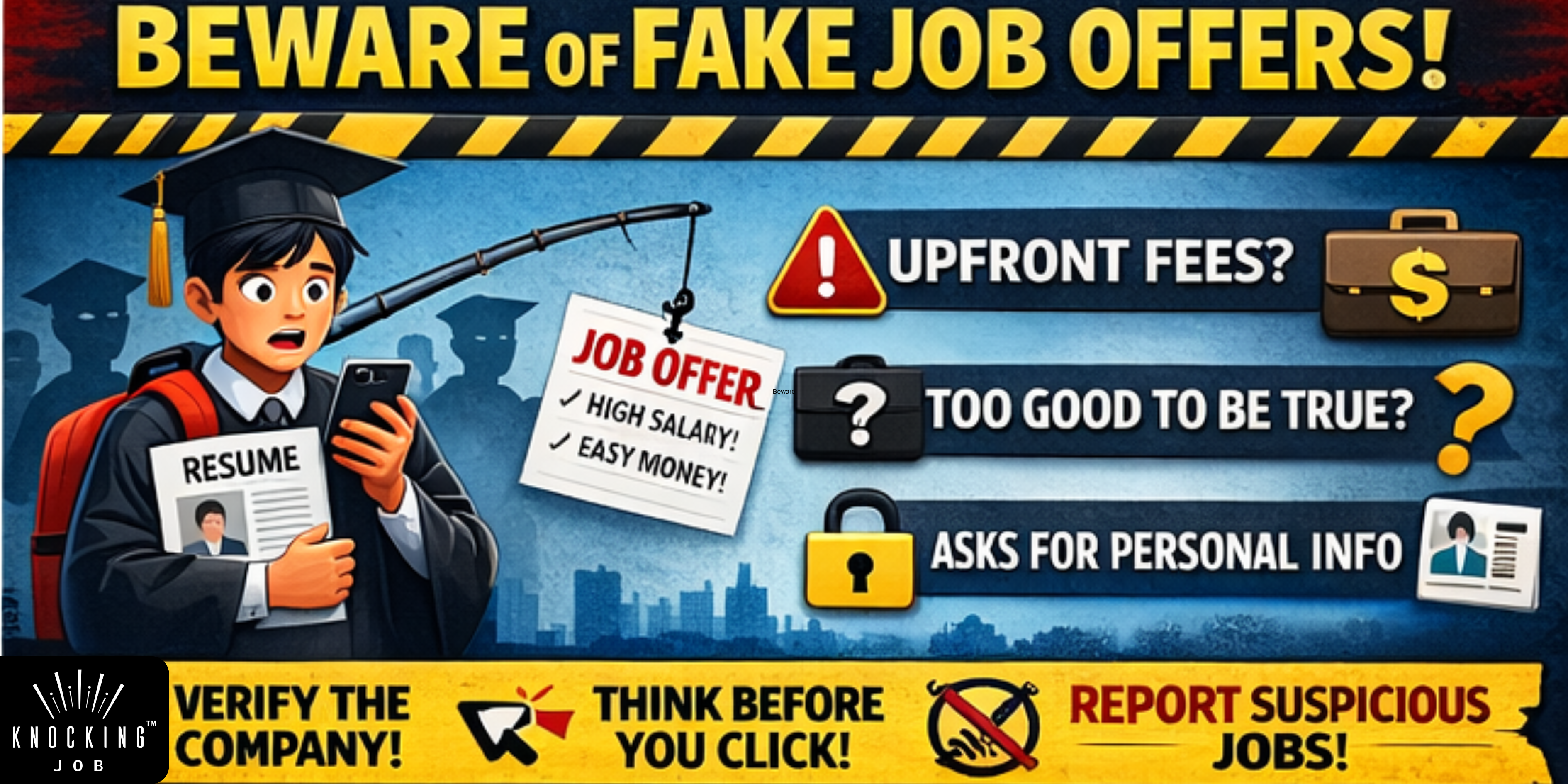
The Indian job market has gone digital—and while that has created millions of opportunities, it has also opened the door to a dangerous rise in job scams. Every day, thousands of job seekers fall victim to fake recruiters, fraudulent offer letters, paid interview scams, and misleading work-from-home schemes.
Freshers, experienced professionals, and even senior executives are being targeted. The emotional pressure of unemployment, urgent financial needs, and the promise of “quick hiring” often push candidates into making rushed decisions.
At knockingjob.com, our mission is not just to connect talent with opportunity, but also to protect job seekers from exploitation. This guide will help you understand how job scams work, identify red flags early, and take the right steps to stay safe in 2026 and beyond.
Why Job Scams Are Increasing in India
Job scams are growing rapidly due to several reasons:
- High unemployment and competition
More candidates chasing limited roles makes people vulnerable to false promises. - Rise of online hiring
WhatsApp, Telegram, emails, and fake job portals are easy tools for scammers. - Lack of awareness
Many job seekers are unaware that no genuine employer asks for money. - Misuse of company branding
Fraudsters copy real company names, logos, and employee profiles from LinkedIn.
Scammers know exactly where desperation meets hope—and that’s where they strike.
Most Common Job Scams in India
1. Registration or Processing Fee Scam
This is the most common fraud.
You are told:
- “Your profile is shortlisted”
- “Pay ₹1,500–₹5,000 for registration / verification / HR processing”
Once paid, the recruiter disappears or keeps asking for more money.
Reality:
Legitimate companies never charge candidates for hiring.
2. Fake Offer Letter Scam
You receive:
- An impressive offer letter
- High salary
- Immediate joining
- No proper interview
Later, they ask for:
- Security deposit
- Laptop or ID card charges
- Background verification fees
Reality:
No genuine company sends an offer letter without multiple interview rounds.
3. Work-From-Home & Part-Time Job Frauds
These scams promise:
- ₹1,000–₹3,000 per day
- Simple typing, form filling, or review posting
- Flexible hours
Then they ask for:
- Activation fees
- App access charges
- Refundable deposits (which never get refunded)
Reality:
If income sounds too easy, it’s usually fake.
4. Fake Recruiters Using WhatsApp & Telegram
Red flags include:
- Only WhatsApp communication
- Poor English or copy-paste messages
- No official email ID
- No video or in-person interview
Reality:
Professional recruiters always communicate via official company channels.
5. Impersonation of Real Companies
Scammers:
- Use names of MNCs or startups
- Create fake LinkedIn profiles
- Copy employee names and HR titles
They often say:
“We are hiring urgently, limited slots available”
Reality:
Urgency is a psychological trick to stop you from verifying details.
Major Warning Signs You Should Never Ignore
If you see even one of these signs, pause immediately:
- Asked to pay any amount for job, interview, or offer
- Email from Gmail / Yahoo instead of company domain
- Interview scheduled without resume screening
- No company website or physical office address
- Salary far above market standards
- Pressure to decide today
- No proper job description or reporting structure
Golden Rule:
If something feels wrong, it probably is.

How to Verify a Job Offer (Step-by-Step)
1. Check the Company Website
- Does the company exist?
- Is the career page updated?
- Does the email domain match?
2. Verify Recruiter Details
- Search recruiter on LinkedIn
- Check employment history
- Look for mutual connections
3. Call Official Company Numbers
Never rely only on WhatsApp numbers provided by recruiters.
4. Search Reviews Online
- Google: “Company name job scam”
- Check Glassdoor, AmbitionBox, Quora
5. Never Share Sensitive Information
Avoid sharing:
- Aadhaar
- PAN
- Bank details
- OTPs
Until you physically join or sign verified documents.
What To Do If You’ve Already Been Scammed
First—don’t panic. Act quickly.
Step 1: File a Cyber Crime Complaint
Visit: cybercrime.gov.in
Register details with screenshots, transaction IDs, and phone numbers.
Step 2: Inform Your Bank
If money was transferred recently, banks may help block or trace transactions.
Step 3: Report on Job Portals
Report fake recruiters on platforms where the job was posted.
Step 4: Warn Others
Share your experience on LinkedIn or forums to save others from falling into the same trap.
Tips for Freshers & First-Time Job Seekers
Freshers are the most targeted group. Keep this in mind:
- Rejections are normal—don’t rush
- Learning opportunities > high salary promises
- Real companies invest in training, not fees
- Take guidance from experienced professionals
Your first job should build your career—not damage your confidence.
How KnockingJob.com Helps Job Seekers Stay Safe
At knockingjob.com, we focus on:
- Verified job listings
- Transparent hiring information
- Employer accountability
- Awareness through career education blogs
Our goal is to create a safe, ethical, and transparent hiring ecosystem for Indian job seekers.
Conclusion
Job scams don’t just steal money—they steal time, confidence, and trust. In a competitive job market, staying alert is as important as upgrading your skills.
Remember:
A genuine employer pays you. You never pay to get hired.
Stay informed. Verify everything. Share knowledge.
Your awareness can protect not just you—but thousands of others.
- Latest Job Openings in India
- How to write a Job-Winning Resume
- The Top Reasons for not getting Interview calls
Frequently Asked Questions (FAQs)
Q1. How can I identify a fake job offer in India?
Fake job offers often ask for money, use personal email IDs, promise unrealistically high salaries, and avoid proper interviews.
Q2. Is it legal for recruiters to charge job seekers fees?
No. Charging candidates for jobs is illegal and unethical. Genuine employers never ask for registration or placement fees.
Q3. Are WhatsApp job offers safe?
Most genuine recruiters do not hire only through WhatsApp. Always verify company email, website, and HR credentials.
Q4. What should I do if I paid money to a fake recruiter?
Immediately file a complaint at cybercrime.gov.in and inform your bank with transaction details.
Q5. Are work-from-home jobs real or fake?
Many work-from-home jobs are genuine, but scams are common. Avoid jobs that ask for upfront payment or guarantee daily income.
Q6. How does KnockingJob.com protect job seekers?
KnockingJob.com focuses on verified listings, transparent hiring information, and job scam awareness to protect candidates.